Ankle Sprains & Lower Limb Injuries: Why They Keep Happening — and How to Break the Cycle
- Anton Levy
- Feb 9
- 3 min read

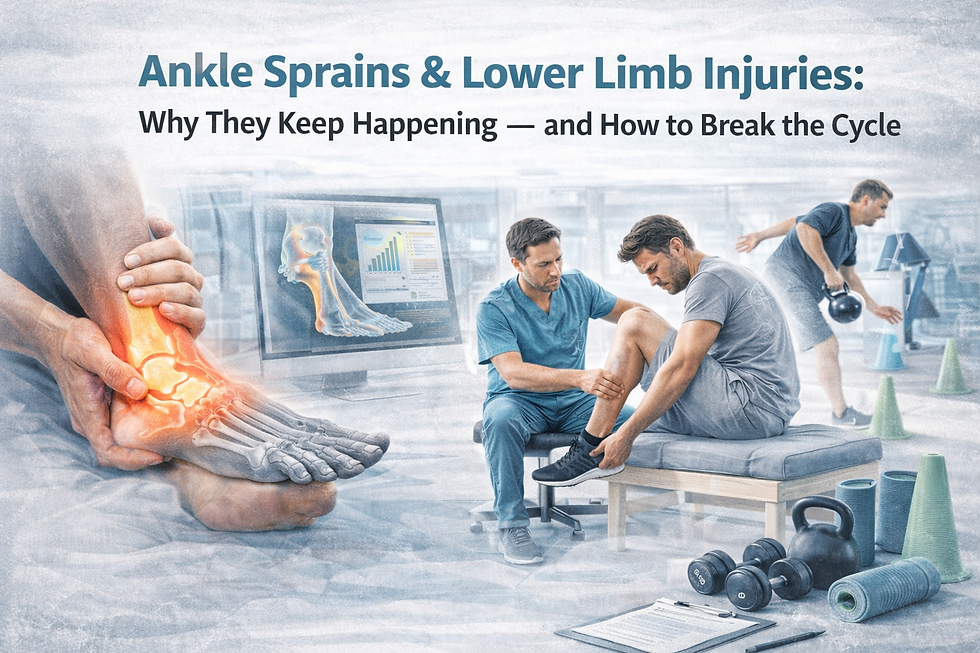
Ankle sprains and lower limb injuries aren’t just “bad luck” or clumsiness. They’re some of the most common injuries in sport and everyday life — affecting kids, weekend warriors, and elite athletes alike. And when they’re not managed properly, they tend to come back… again and again.
These injuries can limit performance, cause ongoing instability, and frustrate people who feel like they’ve “never fully recovered.”
The good news? With the right education and physiotherapy, most ankle and lower limb injuries recover fully — often without scans, boots, or extended time off.
In this post, we’ll unpack what’s really going on, what doesn’t work, what does, and how our approach at Functional Xcellence helps people return stronger, more confident, and less injury-prone.
What’s Going On? The Basics of Ankle & Lower Limb Injuries
Most ankle sprains and lower limb injuries don’t happen in isolation. They’re usually the result of a combination of load, movement patterns, and strength deficits.
Common injuries include:
Ankle Sprains (Lateral Ligament Injuries): Rolling the ankle inward, causing pain, swelling, and instability — often during sport or uneven ground.
Achilles & Calf Strains: Pain and stiffness in the lower leg, often linked to running, jumping, or sudden increases in training.
Shin Pain & Stress Reactions: Diffuse or localized pain along the shin from repetitive loading.
Knee & Hip Overload Injuries: Pain around the knee or hip that develops gradually due to poor force absorption below or above the joint.
Common features include:
Pain during or after activity
Swelling or stiffness (especially around the ankle)
Feeling unstable or “weak” when changing direction
Recurring injuries on the same side
Loss of confidence with running, jumping, or cutting
If not properly rehabbed, these injuries can lead to chronic ankle instability or ongoing lower limb problems that affect performance and daily life.
What Doesn’t Work (or Helps Less)
Ignoring ankle sprains — “It’ll settle on its own”
Rest-only approaches — pain settles, but strength and control don’t return
Over-reliance on scans — imaging rarely changes early management
Using braces forever — support without strength creates dependency
Returning to sport without rehab — the fastest way to re-injure
These approaches often lead to repeat sprains, lingering pain, and frustration.
What Does Work: Evidence-Based Rehab for Stronger Lower Limbs
1. Early, Guided Movement
Complete rest isn’t the answer. Controlled movement helps tissues heal better.
Restore ankle range of motion early
Reduce swelling with movement and compression
Gradually reintroduce weight-bearing as tolerated
2. Strength Where It Matters
Ankles don’t work alone — the entire lower limb must absorb and generate force.
Calf strength for push-off and shock absorption
Foot and ankle control for balance and stability
Glute and hip strength for alignment and load sharing
3. Balance, Proprioception & Control
This is where most rehab fails — and why injuries return.
Single-leg balance work
Change-of-direction drills
Sport-specific reaction and agility training
4. Smart Load Progression
Your tissues need time to adapt.
Gradual return to running and jumping
Progressive exposure to cutting and uneven surfaces
Clear return-to-sport benchmarks — not guesswork
5. Education & Confidence
Understanding your injury changes outcomes.
Pain doesn’t equal damage
Swelling doesn’t mean you’ve “re-injured” it
Confidence and exposure are part of recovery
Bottom Line & Take-Home Messages
Ankle sprains and lower limb injuries are common — but recurring ones are preventable.
Rest alone isn’t rehab. Strength, balance, and load progression matter.
Early physiotherapy reduces re-injury risk and improves long-term outcomes.
Strong ankles are built, not taped or braced forever.
A whole-limb approach (foot to hip) creates resilient, confident movers.
At Functional Xcellence, we assess how you move, load, and absorb force — then build a progressive rehab plan that doesn’t just get you back, but keeps you there.


Comments